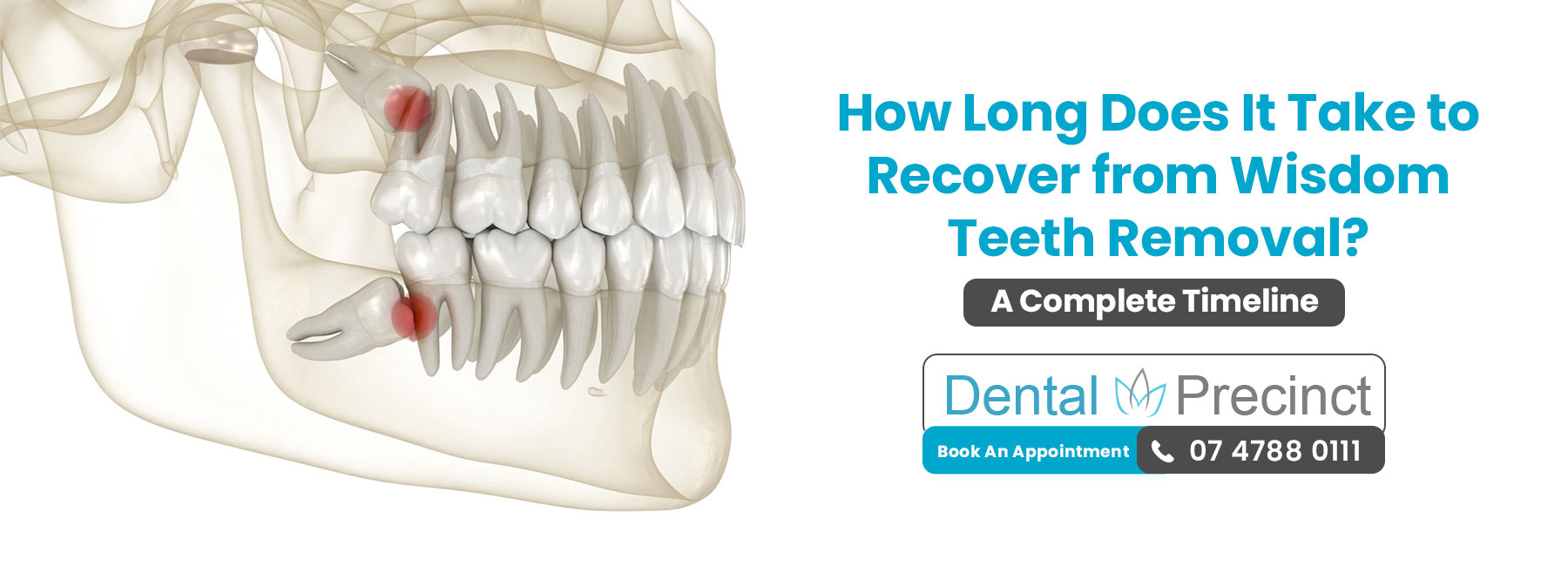
How Long Does It Take to Recover from Wisdom Teeth Removal? A Complete Timeline
So you’ve just had your wisdom teeth out — or you’re about to — and you’re wondering: how long is wisdom teeth recovery going to take? The honest answer is that most people feel back to normal within 3 to 5 days. Full soft-tissue healing takes about 1 to 2 weeks. And complete internal bone healing? That happens quietly in the background over 3 to 6 months — without disrupting your daily life. But here’s the thing: knowing exactly what to expect each day makes all the difference. When you understand the timeline, you stop worrying and start healing. In this guide, we’ll walk you through every stage of wisdom teeth removal recovery — day by day, week by week — so there are no surprises.
Why Does Wisdom Teeth Recovery Take as Long as It Does?
Your mouth is doing serious repair work after a wisdom tooth is removed. A blood clot has to form, gum tissue has to grow back over the socket, and eventually, the jawbone itself has to fill in the empty space. None of that happens overnight.
How long your wisdom tooth removal recovery actually takes depends on a few key factors:
- How the tooth was positioned. An erupted tooth that sits above the gumline is much easier to remove than an impacted tooth that’s trapped beneath bone or gum tissue. Impacted extractions take longer to heal.
- How many teeth were removed. Taking out all four wisdom teeth at once means more surgical sites to heal simultaneously.
- Your age. Younger patients — especially those in their teens and early twenties — typically heal faster because their roots aren’t fully formed and their cells regenerate more quickly.
- How well you follow aftercare instructions. This is the factor you control most. Patients who rest, stick to a soft diet, and avoid smoking heal significantly faster.
Understanding these factors helps set realistic expectations — and helps you take the right steps from day one.
The Wisdom Teeth Recovery Timeline: Day by Day
Days 1–2: The Most Critical Stage
The first 48 hours are the most important of your entire recovery. This is when the blood clot forms inside the socket — and that clot is everything. It protects the exposed bone and tissue underneath and kickstarts the healing process.
What to expect:
- Bleeding that slows with gauze pressure
- Swelling beginning to build in your cheeks and jaw
- Pain or discomfort once the anaesthetic wears off
- Possible drowsiness if sedation was used
What to do:
- Rest and keep your head elevated — even while sleeping
- Use an ice pack wrapped in a cloth (20 minutes on, 20 minutes off) to manage swelling
- Take pain medication as directed by your dentist
- Stick to cold, soft foods — think yoghurt, smoothies, mashed potato, soup
- Avoid straws, spitting, and smoking — the suction can dislodge that all-important blood clot
Days 3–4: Swelling Peaks, Then Starts to Settle
Most people find that swelling hits its worst point around day 2 or 3 — and then gradually begins to ease off. Pain also tends to peak and then steadily improve from here.
This is usually the point where patients start feeling noticeably better. Many people return to light activities like desk work or attending school by day 3 or 4.
Keep eating soft foods and avoid anything crunchy, hard, or chewy. Your socket is still very much in an early healing phase, even if you’re feeling better.
Days 5–7: Back to the Routine
By the end of the first week, most patients have returned to their normal routine. Swelling and bruising are fading, pain is minimal for most people, and eating is becoming easier.
Your gum tissue is actively closing over the extraction site. You might notice it starting to look pink and healthy rather than raw or open.
Important: Feeling better doesn’t mean the healing is done. Continue avoiding hard or crunchy foods and be gentle when brushing near the surgical site.
Week 2: Major Recovery Complete
By the end of two weeks, the major visible recovery is largely done for most straightforward extractions. Any stitches (if placed) are usually dissolved or removed around this stage. Swelling, bruising, and significant pain should be gone.
You can generally return to your full normal diet, exercise routine, and daily activities. Your dentist may schedule a follow-up appointment around this time to check how everything is progressing.
Weeks 3–8: Gum Tissue Closes Fully
Though you’ll feel completely normal well before this stage, the gum tissue continues to close and firm up over the socket. Most extraction sites are fully covered with healthy gum tissue within 6 to 8 weeks.
3–6 Months: Complete Internal Healing
This phase happens entirely beneath the surface. Your jawbone is slowly filling in the socket left behind by the tooth root. You won’t feel this happening — but it is. By 3 to 6 months, the bone is fully regenerated and the area is structurally healed.
How to Speed Up Wisdom Teeth Recovery (and What to Avoid)
You can’t rush biology — but you can absolutely avoid slowing it down. Here’s how to keep your wisdom tooth removal recovery on track:
Do:
- Rest as much as possible in the first 48 hours
- Keep your head elevated, especially when sleeping
- Stay hydrated with water and soft, nutritious foods
- Gently rinse with salt water from day 2 onwards (as directed)
- Take prescribed or recommended pain relief consistently in the first few days
Avoid:
- Smoking — it restricts blood flow, dislodges clots, and significantly increases your risk of complications
- Straws — the suction pressure can pull the blood clot right out of the socket
- Hard, crunchy, or spicy foods in the first week
- Strenuous exercise for the first 3 to 5 days
- Touching the wound with your tongue or fingers
Wisdom Teeth Recovery Warning Signs: When to Call Your Dentist
Most wisdom teeth recoveries are smooth and uneventful. But it’s important to know the red flags that warrant a prompt call to your dentist.
Contact your dentist if you notice:
- Pain that gets worse after the first 72 hours instead of better — this can signal dry socket, where the blood clot has been dislodged
- A bad taste or smell coming from the extraction site
- Swelling that is increasing (not decreasing) after day 3
- Fever, chills, or visible pus — signs of infection
- Numbness or tingling that doesn’t resolve in the days following surgery
Catching these complications early means faster treatment and a quicker return to normal. Don’t wait and hope — call your dentist.
How Dental Precinct Can Help with Wisdom Teeth Removal in Townsville
At Dental Precinct in Townsville, we understand that the idea of wisdom teeth removal can feel overwhelming. That’s why our team uses advanced, gentle techniques to make the experience as comfortable as possible — and we’re with you every step of the recovery too.
Whether your wisdom teeth are just starting to cause trouble or have been bothering you for a while, we offer personalised treatment plans, flexible interest-free payment options, and the kind of caring environment that puts even the most anxious patients at ease. We’re conveniently located at 2 Lionel Turner Dr, Bushland Beach, and serve patients right across Townsville and surrounding suburbs.
Ready to stop putting it off? Call us today on (07) 4788 0111 or book an appointment online. Your comfort — and your smile — is our priority.
Frequently Asked Questions
- How long does wisdom teeth recovery take for most people?
Most people feel well enough to return to school or work within 3 to 5 days. Full soft-tissue healing takes 1 to 2 weeks, though internal bone healing continues for 3 to 6 months without affecting your daily life. - How long does it take for wisdom teeth holes to heal?
The socket typically closes over with gum tissue within 6 to 8 weeks. You’ll notice significant improvement much earlier — usually within the first week — as the gum tissue starts to fill in from the edges. - Is wisdom teeth recovery worse when all four are removed at once?
Recovery can be more intense when all four are removed together due to more surgical sites healing simultaneously. However, many patients prefer getting it done in one procedure to avoid multiple recovery periods. Your dentist can advise what’s right for your specific case. - What is dry socket and how do I know if I have it?
Dry socket occurs when the blood clot in the extraction site is dislodged or fails to form, leaving the bone exposed. It typically causes a sharp, throbbing pain that worsens after the first 2 to 3 days rather than improving. If you suspect dry socket, contact your dentist promptly — it’s very treatable. - When can I eat normally after wisdom teeth removal?
Most people can ease back into a normal diet within 7 to 10 days. Start with soft foods for the first week, then gradually reintroduce firmer foods as comfort allows. Avoid anything very hard, crunchy, or chewy until you’re fully healed. - Can I exercise during wisdom teeth recovery?
Light walking is generally fine after the first couple of days, but avoid strenuous exercise, heavy lifting, or intense cardio for at least 3 to 5 days. Physical exertion raises your blood pressure and can cause bleeding or disrupt the healing blood clot.
Recovery from wisdom teeth removal is a process — but it’s one your body is well-equipped to handle. Follow your dentist’s aftercare instructions, give yourself proper rest in those critical first few days, and most patients are surprised by how quickly they bounce back. If you’re in Townsville and ready to finally sort out those wisdom teeth, the team at Dental Precinct is here to make it straightforward and stress-free.
About The Author