Can Buck Teeth Be Fixed? Causes, Treatments and What to Expect
Buck teeth happen when the upper front teeth sit noticeably forward of the lower teeth, and it is one of the most common reasons people visit an orthodontist. This blog explains what causes buck teeth, how orthodontists diagnose the condition, and which treatments work well for children, teenagers and adults. You will also learn what happens if buck teeth are left untreated, how long treatment usually takes, and how to protect your results afterward. The reassuring part is that buck teeth respond well to treatment at almost any age, and understanding your options early makes the process simpler.
What Are Buck Teeth?
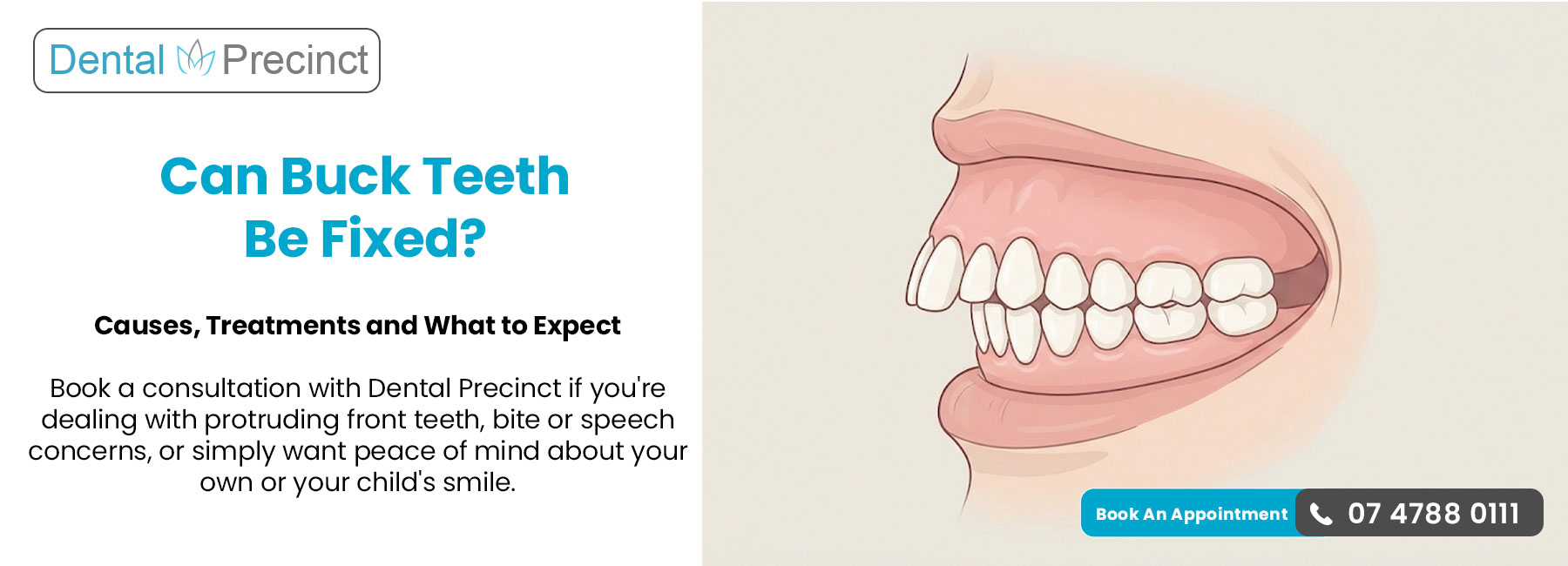
Buck teeth is the everyday term for protruding upper front teeth, known to orthodontists as an increased overjet, which can involve the teeth, the jaw, or both. It’s often confused with overbite: overjet is how far forward the upper teeth sit compared with the lower teeth (horizontally), with a healthy range of around 2–4mm, while overbite is how much the teeth overlap vertically when biting down. Anything noticeably larger than a healthy overjet is generally considered buck teeth.
How Orthodontists Diagnose Buck Teeth
An orthodontist does not diagnose this with a quick glance. Diagnosis typically involves:
- Measuring the overjet precisely
- Checking how the upper and lower teeth meet when biting
- Taking photographs, X-rays and a digital scan
- In many cases, a side profile skull X-ray called a lateral cephalogram, which shows whether the jaw bones themselves are positioned differently
This last step matters because it decides whether moving the teeth alone will fix the problem, or whether the jaw needs addressing too.
What Causes Buck Teeth?
Several different factors can lead to buck teeth, and more than one is often involved at the same time.
-
Genetics and Jaw Development
The most common cause. Jaw size and shape are largely inherited, and an upper jaw that naturally sits forward can cause protruding teeth regardless of childhood habits.
-
Thumb Sucking and Prolonged Pacifier Use
Sustained pressure gradually pushes developing teeth forward. This is usually harmless in infancy, but continuing past around three or four years of age can affect how adult teeth align.
-
Tongue Thrusting Habits
Pushing the tongue against the front teeth during swallowing applies constant, gentle pressure that can move teeth over time and even undo previous orthodontic treatment.
-
Missing, Crowded or Misaligned Teeth
Crowding pushes front teeth outward, and losing teeth early allows the surrounding teeth to drift out of position.
-
Other Factors That Can Affect Tooth Alignment
Chronic mouth breathing, enlarged tonsils or adenoids affecting tongue posture, and habits like nail biting or pen chewing can all contribute.
Signs and Symptoms of Buck Teeth
Common signs and symptoms include:
-
Noticeably Protruding Front Teeth
The upper teeth sit visibly forward and the lips may not close comfortably over them.
-
Difficulty Biting or Chewing
Front teeth that don’t meet can’t tear food cleanly, shifting work to teeth not designed for it.
-
Speech Difficulties
Sounds needing tongue-to-tooth contact — s, z, th — can be affected.
-
Increased Risk of Tooth Injury
The most under-appreciated symptom. Research consistently links a larger overjet to higher rates of front-tooth trauma in children, because protruding teeth take the impact first in falls and sport.
-
Self-Confidence and Smile Concerns
Many patients cover their mouths in photos. That’s a legitimate reason to seek treatment, not a vain one.
Can Buck Teeth Be Corrected?
Yes, in almost every case. The right approach depends on age, the size of the overjet, whether the cause is dental or skeletal, and overall oral health.
Timing matters most for children, since orthodontic appliances can guide jaw growth while the jaws are still developing, sometimes avoiding surgery later. Australian dental and orthodontic bodies generally recommend a first assessment around age seven, once enough adult teeth have appeared to show how the bite is developing. Acting early reduces trauma risk, makes cleaning easier and usually means simpler treatment.
Treatment Options for Buck Teeth
| Treatment | Best Suited For | Key Notes |
|---|---|---|
| Traditional metal braces | Wide range of cases, including significant overjet | Most predictable option; usually the most affordable |
| Ceramic braces | Adults wanting fixed treatment that is less visible | Same mechanics as metal braces, with tooth-coloured brackets |
| Clear aligners | Mild to moderate overjet | Must be worn 20–22 hours a day; not always suitable for larger movements |
| Functional orthodontic appliances | Children aged roughly 10–14 during their growth spurt | Encourages the lower jaw forward, addressing the skeletal cause directly |
| Tooth extraction | Cases with crowding and no room to retract front teeth | Creates space by removing one or two smaller back teeth; carefully planned |
| Orthognathic (jaw) surgery | Severe skeletal cases in adults whose growth has finished | Repositions the jaw itself alongside braces; a hospital procedure |
Buck Teeth Treatment for Children vs Adults
-
Early Orthodontic Treatment for Children
Generally ages seven to ten. Treatment focuses on stopping habits, creating space and guiding jaw growth — the only window where the skeletal relationship can genuinely be influenced.
-
Orthodontic Solutions for Teenagers
The natural growth spurt makes this an ideal time for functional appliances followed by braces or aligners. Consistent wear is the main factor in success.
-
Adult Treatment Options
Teeth can still move successfully at any age with healthy gums and bone. Gum treatment may be needed first, and severe skeletal cases may require surgery since growth can no longer be guided.
How Long Does Buck Teeth Treatment Take?
Most treatment plans take 12 to 24 months, though timelines vary:
- Mild cases treated with clear aligners can finish in 6 to 12 months
- Complex skeletal cases involving surgery can run beyond two years
Duration depends on how far the teeth must move, whether the jaw is involved, your age, and how closely you follow your orthodontist’s instructions. Retainers follow every case, since teeth naturally drift back afterward, making retention an essential final step rather than an optional extra.
What Happens If Buck Teeth Are Left Untreated?
Leaving buck teeth untreated carries risks that build up over time rather than staying the same:
- >Higher risk of tooth trauma — protruding front teeth are more likely to be chipped, fractured or knocked out in a fall or contact sport
- Uneven tooth wear — teeth that do not meet correctly wear unevenly, and this wear cannot be reversed
- Difficulty cleaning teeth — protruding, overlapping teeth are harder to brush and floss properly
- Increased risk of gum disease and tooth decay — a direct result of harder-to-clean teeth
- Bite and jaw problems — an uncorrected bite can load the jaw joints unevenly over many years, sometimes contributing to discomfort or headaches
Tips to Maintain Your Results After Treatment
- Wear your retainer as directed. The single biggest factor. Most patients move to night-only wear long term; stopping altogether is the most common reason teeth relapse.
- Maintain good oral hygiene. Brush twice daily with fluoride toothpaste and clean between your teeth, especially around fixed retainer wires.
- Attend regular check-ups. Dental visits and orthodontic reviews catch early movement while it’s easy to address.
- Avoid habits that affect alignment. Nail biting, pen chewing and tongue thrusting apply the same forces that caused the problem. Persistent tongue thrust may need therapy.
When Should You Visit an Orthodontist?
Book an assessment if any of the following apply:
- Front teeth protrude noticeably
- Lips do not close comfortably
- Biting or speech seems affected
- A thumb-sucking habit continues past age four
- A child is approaching age seven without an orthodontic check
Early diagnosis widens your options, since problems caught during growth can often be guided into place rather than corrected afterward, and adults who act before significant wear or gum recession occurs generally have simpler treatment available.
Book Your Orthodontic Assessment at Dental Precinct
Book a consultation with Dental Precinct if you’re dealing with protruding front teeth, bite or speech concerns, or simply want peace of mind about your own or your child’s smile. Our friendly team will properly examine your teeth and jaw alignment, take the necessary X-rays and scans, and recommend a treatment plan that genuinely suits your situation.
Don’t wait for a small concern to become a bigger one. Visit us at 2 Lionel Turner Dr, Bushland Beach, or call us on (07) 4788 0111 to book your consultation today.
Frequently Asked Questions
Can adults get treatment for buck teeth?
Yes, age is not a barrier as long as your gums and supporting bone remain healthy. Adults commonly use braces or clear aligners, while severe skeletal cases may need jaw surgery alongside braces.
Are clear aligners effective for correcting buck teeth?
For mild to moderate overjet, yes, provided they are worn 20–22 hours daily. Larger corrections are often better managed with fixed braces.
How long does it take to fix buck teeth?
Most cases take 12 to 24 months, with minor corrections finishing sooner and surgical cases taking longer. A proper examination gives the most accurate estimate.
Can buck teeth return after orthodontic treatment?
Yes, if retainers are not worn as recommended. Relapse risk is highest in the first year and never fully disappears, which is why long-term night wear is recommended.
Conclusion
Buck teeth usually develop from inherited jaw shape, childhood habits like thumb sucking or tongue thrusting, or tooth crowding, showing up as protruding front teeth, awkward biting, occasional speech changes, a higher injury risk and understandable self-consciousness. Nearly all cases are treatable, and earlier assessment keeps more options open.
If you are wondering whether your own smile, or your child’s smile, needs attention, book a consultation with the experienced team at Dental Precinct for a full assessment and a friendly discussion about the options best suited to your needs.
About The Author